The Story
The story of managing abundant petroleum in a warming world is told in three parts.
Part 1: The Problems
Deeply rooted, mistaken patterns of conventional thinking prevail about oil and gas. Market failures that stand in the way of progress: massive externalities, incomplete knowledge, oligopolistic behavior, and intergenerational inequities. For all the awareness, optimism, and determination ongoing energy and climate action has inspired, even the most well-intentioned policies are often hampered by mistaken assumptions about the nature of the problem. After fifty years of pursuing a coveted, wholesale, low-carbon future powered renewables, oil and gas continue to supply the majority of global primary energy.
Part 2: The Players
The main characters include industry, governments, and civil society. An every-changing guard of producing, refining, and shipping companies, diverse industry consumers, banks and other investors, and insurers help churn out hundreds of millions of barrels of oil, gas, and assorted petroleum products each day. Governments regulate, provide oversight, and collect handsome rents from oil and gas operations. A hodgepodge of civil society actors—NGOs, philantropies, academia, think thanks, and citizens—are doggedly working to balance private interests and public goods in a largely uncoordinated fashion.
Part 3: The Pathways
While there is no silver bullet to slash societal impacts from the oil and gas sector, carefully crafted two-percent solutions are at the ready. The world cannot wait for oil and gas resources to run out. The Oil Climate Index plus Gas (OCI+)—the decision-making tool developed by Gordon and her collaborators—identifies actionable, cost-effective solutions to make the oil and gas we use today as low-waste and low-emitting as possible that will significantly cut emissions as we transition to a zero-carbon energy system.
The Myths
-
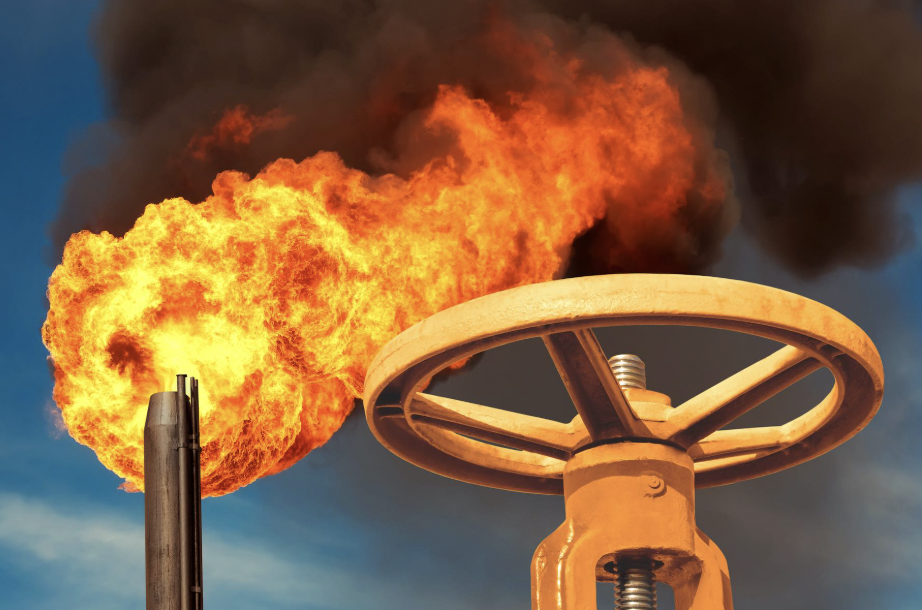
Reality: Oil and gas are abundant and consumption is rising.
-
Reality: Their volumes may be standard, but all oils and gases are not created equal.
-
Reality: Oil and gas have wide ranging greenhouse gas emissions.
-
Reality: Depending on the oil or gas, over 50% of total emissions can come from industry, before end uses.
Q&A
Q: How many emissions are in a standard barrel of oil and gas?
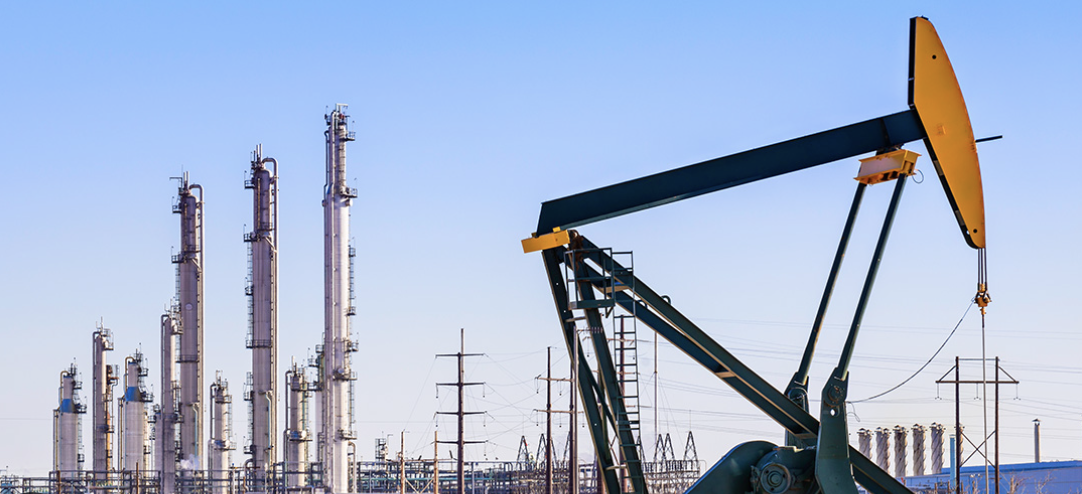
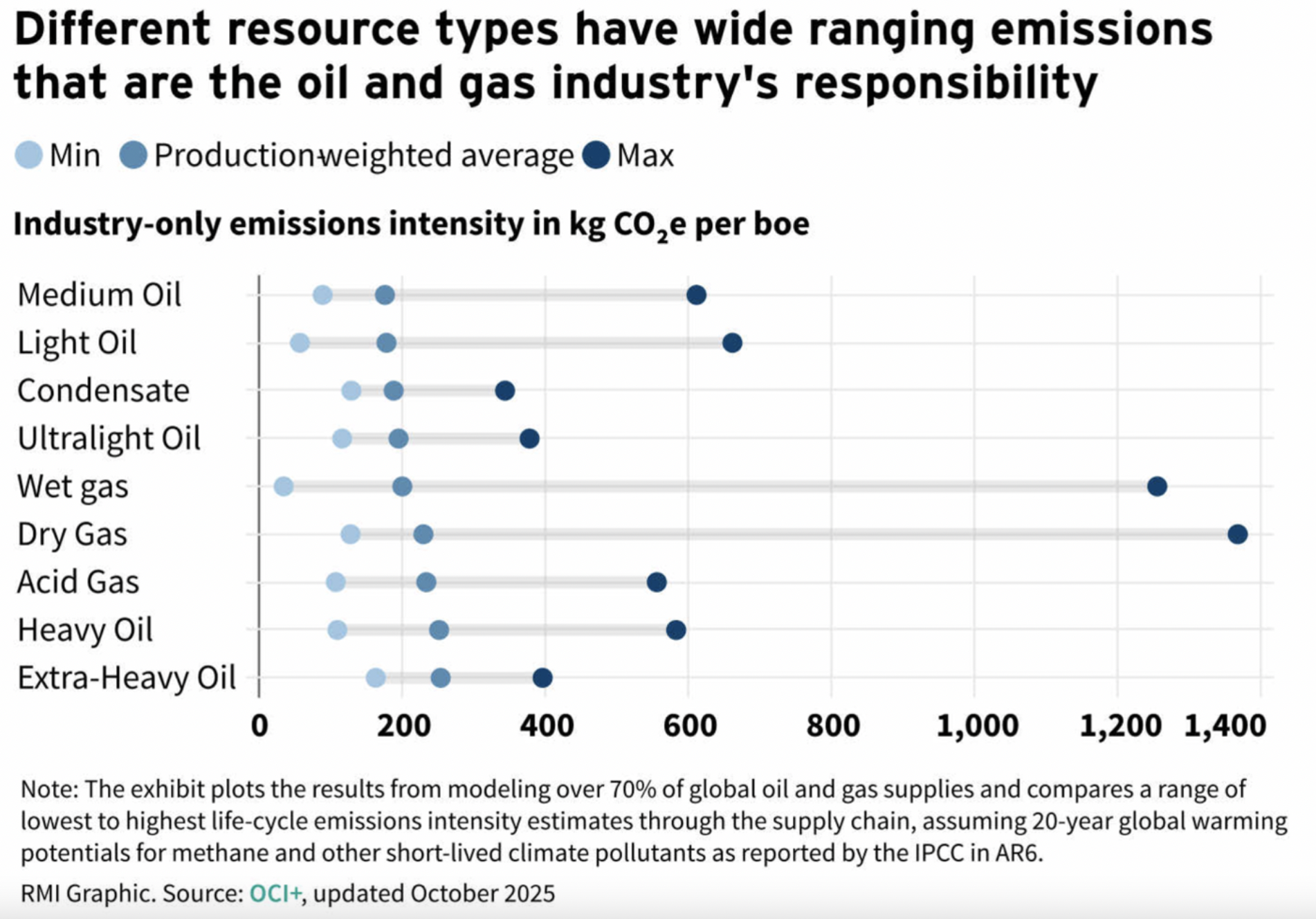
A: It’s complicated but quantifiable. Emissions from oil and gas vary by asset, location, and age. These resources are diverse, ranging from the heaviest oils, with the consistency of peanut butter, to wet gases that are more like cream soda. Their varying makeups require varying complex processes to extract, process, transport, and turn oil and gas into fuels and other end products.
Q: How do countries’ methane emissions compare for equivalent barrels of oil and gas?
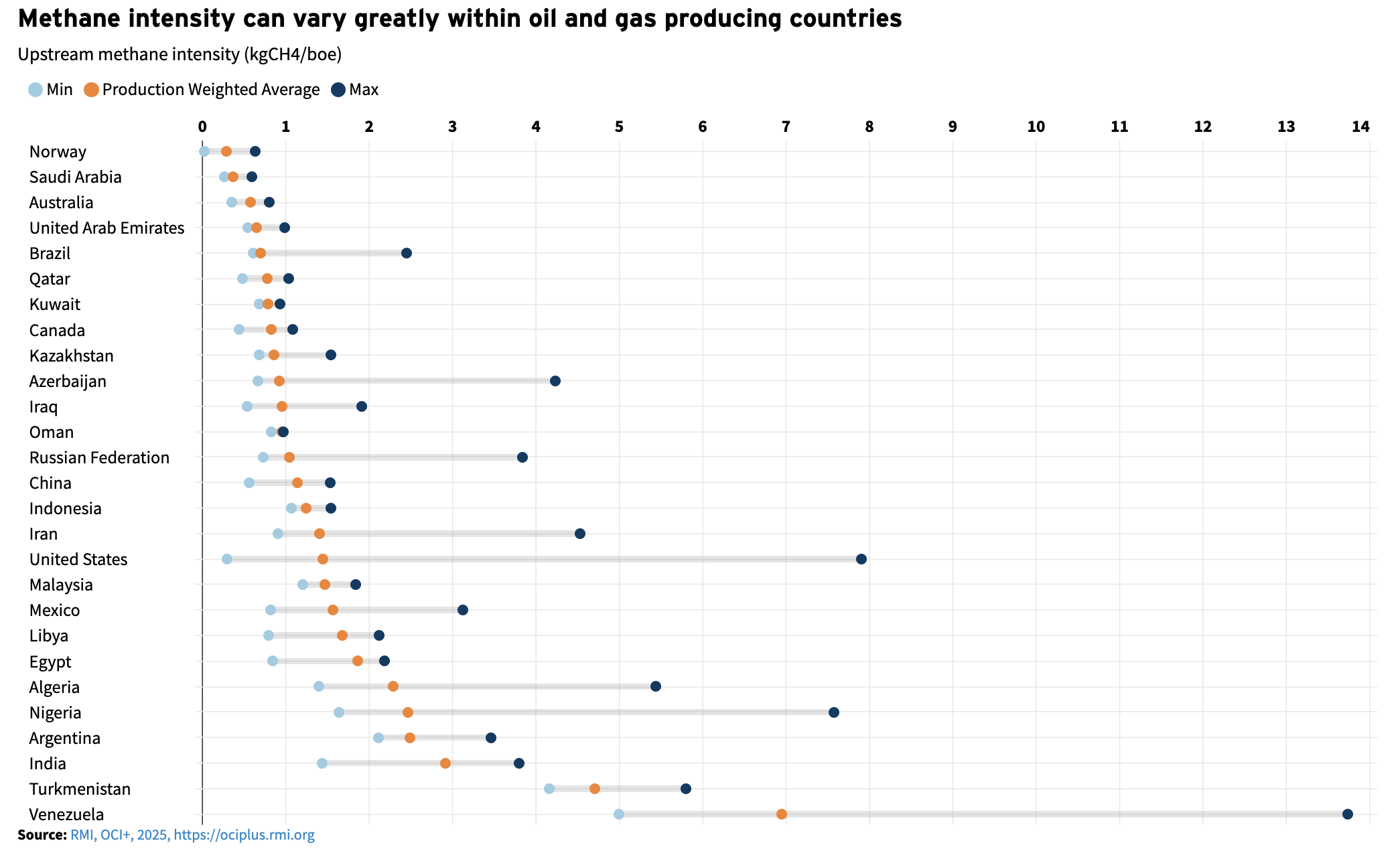
A: Different nation’s oil and gas assets have varying emissions intensities. On average, gas leakage ranges, and every nation has opportunities to prevent wasted gas especially from their most methane-intensive assets.
Q: How is the oil and gas industry changing?
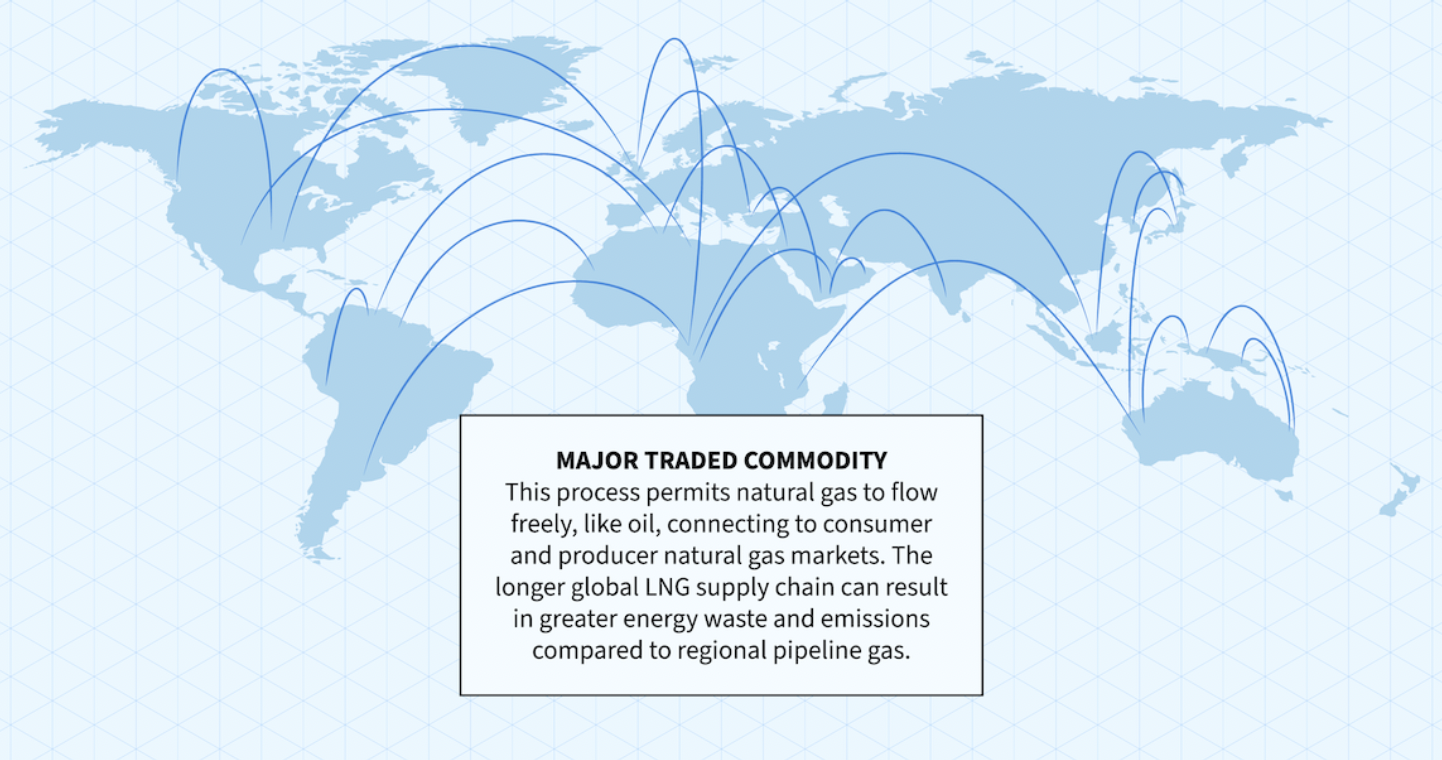
A: Gas used to be a largely unwanted byproduct of liquids production. Today, it is becoming a highly traded global commodity that is shipped around the world as liquefied natural gas (LNG). But the longer oil and gas supply chains become, the more energy required for transport, and the greater the risk of gas leakage throughout the system.
Q: If gas is a high-priced commodity, how can it also be intentionally and unintentionally wasted?
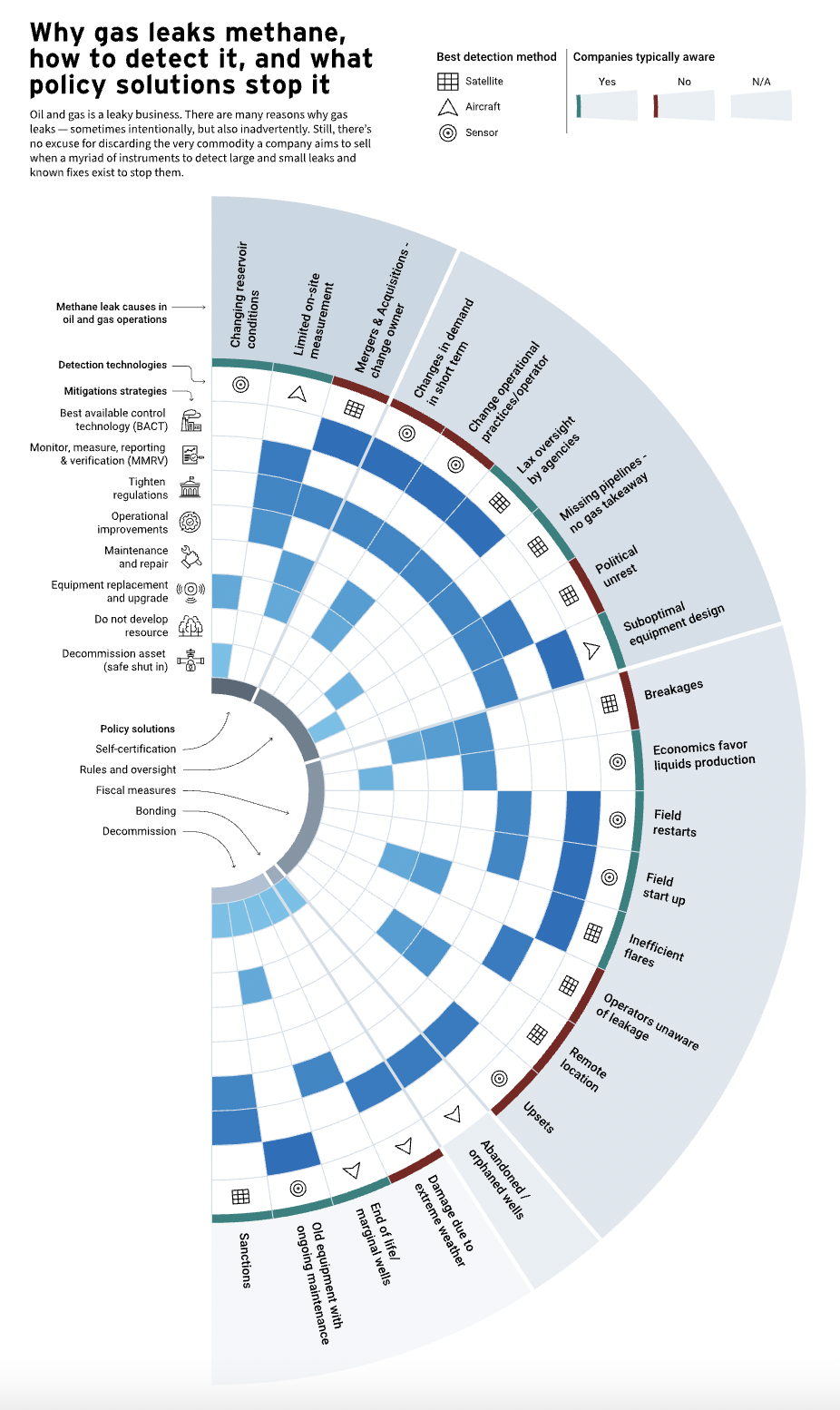
A: The oil and gas sector is a leaky business. Wasteful industry operations account for an estimated 80 million metric tons of methane leaked, squandering precious resources and flying in the face of economic logic. Stopping gas from leaking is prudent and relatively risk free. This prevents danger, damage, and waste. Solutions are straightforward, ready-to-implement, and cost-effective, including advanced monitoring, mandatory reporting, government regulations, financial incentives, and voluntary actions.
Q: Are there near-term actions that can be taken to minimize waste and cut oil and gas sector emissions?
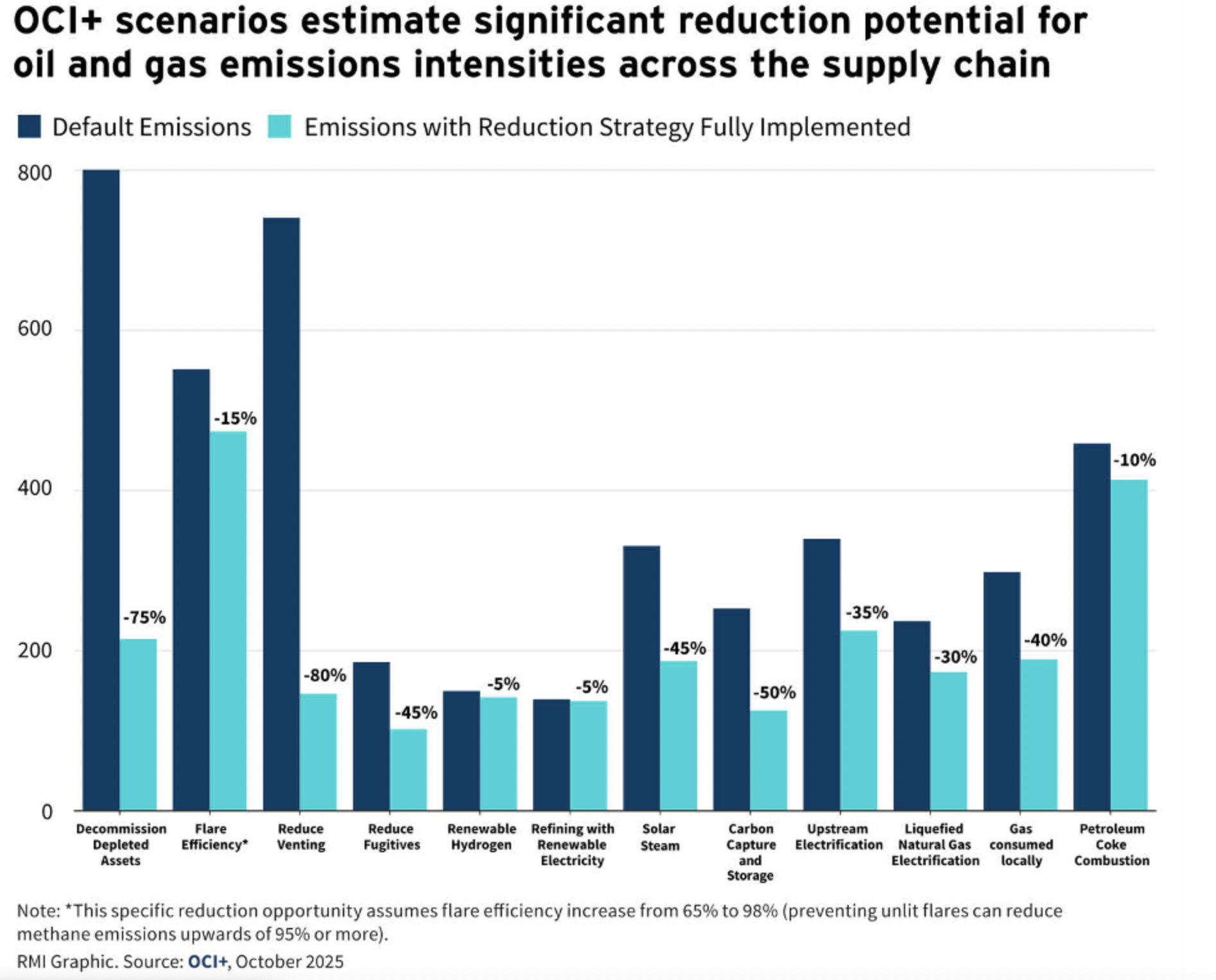
A: The OCI+ arms industry, investors, insurers, and policymakers with knowledge so they can strategically target the most effective ways to reduce emissions from the diversity of oil and gas assets worldwide. Decision-making tools for production, processing, refining, transport, and end uses find that emissions can be slashed by as much as 80 percent, making a huge contribution to waste reduction and climate action now.
Q: Is there a way to make invisible methane, visible?
A: Yes. And we can manage what we measure. Satellites in orbit can spot and quantify methane around the globe from oil and gas facilities and other point sources. Missions include: Carbon Mapper, EMIT, GOSAT-GW, GHGSat, and others are operated by nonprofits, governments, and private companies.

Satellite sensor detecting methane leakage from an LNG tanker offshore Louisiana.
Source: Carbon Mapper 2021.

Creating Climate Intelligence.
No standard oil: Managing abundant petroleum in a warming world