Oxford University Press
Paperback Edition, 2025
Foreword by Jessica T. Mathews
Distinguished Fellow
Carnegie Endowment for International Peace
New Afterword
On wasting gas and emitting methane
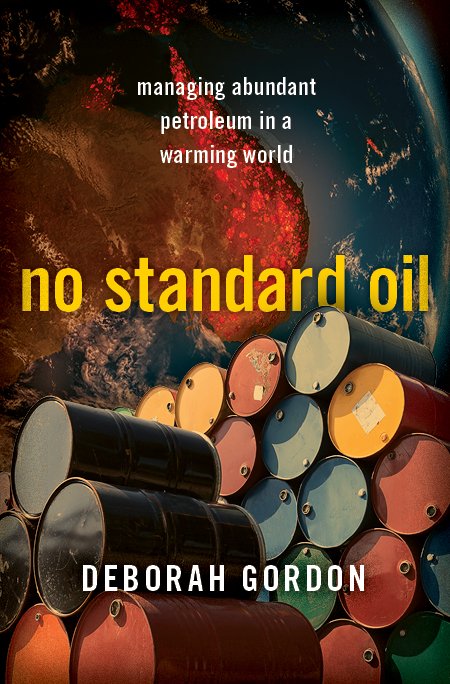
In No Standard Oil, energy and environmental policy expert Deborah Gordon examines the widely varying climate impacts of global oils and gases, and proposes solutions to cut greenhouse gas emissions in this sector while making sustainable progress in transitioning to a cleaner energy future.
Gordon finds that no two oils or gases are environmentally alike. Each has a distinct, quantifiable climate and other impacts. While all oils and gases pollute, some are much worse for the climate than others. Some contain toxic impurities that harm people and damage property. In clear, accessible language, No Standard Oil showcases the results of the Oil Climate Index Plus Gas (OCI+), an innovative, public web tool that quantifies and compares global oil and gas life-cycle emissions. The OCI+ evaluates oils and gases from every region of the globe—along with the specific production, processing, refining, transport, and end use activities—that are the most harmful to the planet, and proposes innovative solutions to cut their energy waste and climate footprints.
Scientific measurements find unprecedented increases in atmospheric levels of the super-pollutant methane, which is over 80-times more warming than carbon dioxide over its decade-long lifetime. While methane is emitted by agriculture, waste, and energy sectors, its most vexing source arises from oil and gas production, processing, and transport. Methane—the main component in gas that is also co-produced with oil—is a valuable commodity. There’s no financial justification for squandering methane gas when capturing it and selling it yields sizeable profits. Slashing oil and gas methane waste addresses more than climate change. More efficient operations result in less energy waste and save costly resources. Containing explosive, noxious gas rather than spewing it reduces risks to public health and private property.
Contrary to popular belief, the world will not run out of these resources anytime soon. Absent low-emission substitutes for today’s plethora of petroleum products, if consumers continue to demand these abundant resources to fuel their cars, heat their homes, power AI, and produce everyday goods like shampoo, pajamas, and paint, emissions will continue to rise. Fueling future demand will be even more environmentally damaging if global energy demand is supplied by liquefying gas that can exacerbate methane emissions. Industry actors, policymakers, financial institutions, insurers, investors, environmental advocates, and citizens need to take differentiate oil and gas resources to inform decision-making.
No Standard Oil shows how we can take immediate, practical steps to cut greenhouse gas emissions in the crucial oil and gas sector while making sustainable progress in transitioning to a carbon-free energy future.